
How 67 Words From London Destroyed A Nation
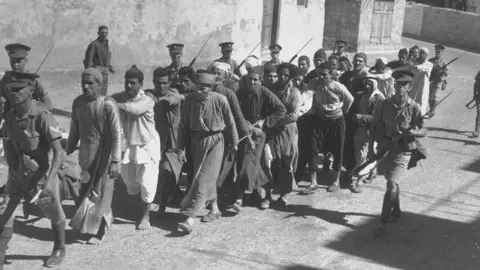
Imagine holding the fate of an entire civilization in the palm of your hand, deciding the destiny of millions with a message shorter than a modern-day social media post. On November 2, 1917, British Foreign Secretary Arthur James Balfour did exactly that. Sitting in the heart of the British Empire, he penned a mere 67-word letter addressed to Lord Rothschild, a prominent leader within the British Jewish community. This piece of correspondence, known as the Balfour Declaration, explicitly stated that His Majesty’s Government viewed with favour the establishment in Palestine of a “national home for the Jewish people”. It was just 67 words, yet those syllables carried the weight of a geopolitical earthquake, altering West Asia and setting the stage for a century of relentless tragedy.
For decades, popular Western narratives have framed this declaration as a grand humanitarian gesture or a noble moral commitment. However, as noted by historian Rashid Khalidi, this document was never an act of charity; it was effectively a declaration of war against the indigenous population. It was a classic manoeuvre of settler colonialism, executed at the direct and devastating expense of the Palestinian majority. The Balfour Declaration was not born out of altruism; it was a cold, calculated geopolitical transaction between the British Empire and the Zionist movement.
To comprehend its insidious nature, we must look at the map of West Asia through the lens of the British War Cabinet during World War I. Britain was entirely unbothered by biblical prophecies, their primary concern was something much more tangible: the protection of the Suez Canal. As historian Jonathan Schneer documents, Britain was engaged in a chaotic web of contradictory diplomacy, promising the exact same territory to the Arabs (via the McMahon-Hussein Correspondence) and dividing it with the French (via the Sykes-Picot Agreement).
However, British strategists, led by Prime Minister David Lloyd George, realized that securing Palestine under a British protectorate would create a vital buffer zone for Egypt and the Suez Canal, securing the empire's route to India. Furthermore, Tom Segev’s archival research reinforces this, revealing that British officials believed a pro-Zionist declaration would mobilize global Jewish influence particularly in the US and Russia to support the Allied war effort. In the grand calculus of imperial dominance, Palestine was merely a disposable pawn on the chessboard of the British Empire.
Simultaneously, the Zionist movement, heavily lobbied by figures like Chaim Weizmann, recognized that their nationalist project required an imperial sponsor. The convergence of interests was perfect.
The Zionists offered Britain a loyal, European-aligned proxy population in a strategically vital region. In return, Britain offered the Zionists the military and diplomatic backing of the world's most powerful empire. Yet, as Oxford historian Avi Shlaim highlights, this alliance was built on a foundation of legal and moral illegitimacy. Britain had no sovereign right to promise Palestine to anyone; the territory was still officially part of the Ottoman Empire. Still, the Zionist movement capitalized on Britain's imperial ambitions, embedding their project within the broader machinery of British colonialism.
The most heartbreaking aspect of the Balfour Declaration is not just what it promised, but what it deliberately erased. In 1917, the Jewish population in Palestine constituted roughly 7 to 10 percent of the total population. The remaining 90 percent were indigenous Palestinian Arabs (Muslims and Christians) who had lived on and cultivated the land for centuries.
The brilliant scholar Edward Said famously dismantled the linguistic violence embedded within the declaration. The document promised national and political rights to the Jewish minority, while explicitly referring to the overwhelming Arab majority merely as “existing non-Jewish communities”. By defining 90 percent of the population solely by what they were not, Britain attempted to strip Palestinians of their national identity. They were granted basic “civil and religious rights,” but tellingly, political and national rights were completely omitted. The British Empire, utilizing a masterclass in colonial arrogance, handed the fate of a nation to a minority, overriding the fundamental democratic principle of self-determination.
This geopolitical calculus did not end with the fall of the British Empire; it merely evolved, transferring its legacy from one superpower to another. Today, we witness the exact same framework of imperial backing and indigenous erasure manifesting in the besieged Gaza Strip and the occupied West Bank. Just as Britain once provided the diplomatic shield for early Zionist expansion, modern global powers most notably the United States (US) continue to provide unconditional military aid and diplomatic vetoes to sustain the Israeli occupation. The linguistic and political violence Edward Said highlighted remains the precise blueprint for Israel's contemporary policies.
When modern political leaders discuss the “day after” in Gaza without consulting the Palestinian people, or when they justify the relentless bombardment of civilian infrastructure under the guise of security, they are operating on the exact same colonial logic drafted by Lord Balfour over a century ago. The refusal to recognize a sovereign Palestinian state today is a direct, unbroken continuation of the 1917 mandate that deliberately stripped them of their political voice.
The Balfour Declaration was the original sin of the modern Palestinian crisis. It was a document born of geopolitical greed, where a European power promised the land of an Arab people to a third party, without ever consulting the indigenous inhabitants. This 67-word letter laid the diplomatic groundwork for the British Mandate, which actively facilitated the demographic shift and the eventual dispossession of the Palestinian people during the Nakba in 1948. As we look at the rubble in Gaza today and witness the unyielding resilience (sumud) of Palestinians against military occupation, the roots of this enduring injustice are extremely visible. They trace directly back to 1917, welding a legacy of suffering that the world is still grappling with today. Aren’t most of the world’s problems today traced back to them? Colonialism. Greed. Power.